Showing posts with label nanowrimo. Show all posts

Saturday, November 9, 2013

Me and the Hollow (Living Alone pt 2)

Hey folks. If you're a regular to the blog, you may have read the post I made about three weeks ago about the challenges I have involved with living by yourself. If you haven't read it, I might suggest hitting it up by clicking here. It'll help with understanding where I'm writing this from.

Also, I'm doing yet another post to do with hollows. Some days feel like maybe I should have renamed the blog to 'Gone Hollow' or something and just made it about Shirosaki. But leave my psychotic anime crush out of this; we're talking tonight over a tall shotglass of mead, about how I've learned to deal with things in my life that suck.

Sass. And psychotic. Brilliant combo.

It can kind of start with high school, the beginning of everyone's self confidence issues. Let's ignore the majority of it for now and I'll just put out that I was one of the nerdy ones. There were no nerdy girls in my classes. If you wanted the absolute nerdiest, there was Andrew and Christian and me. Andrew and Christian were best buds, and I eventually learned that people are difficult. So I copped slack for that. I also copped slack, or rather, didn't cop anything, because I was the plain one. It took a while for me to be noticed as a female by the lads, and very little went on there, so we'll skim over that too. In fact, in lieu of telling everyone how flipping awkward high school was for me, how about we just go with the obvious.

Brooke is short.

My Pop is tall. He has to duck under doorways, and I'm fairly sure I still stand below his shoulder. My Nan, and Grandma and Grandpa, are all short. In spite of 'tall' being a dominant genetic trait, I got the short end of the stick, so to speak. I stand at 5' 3"; the shortest in my nuclear family. It meant a few things.

It meant that I do enjoy climbing things more than other people.

It meant that I got used to looking up when talking to people.

It meant that when I started wearing my clompers (leather working shoes), which have like an inch heel on them, and then change back to flat shoes, I have to try and figure out why everyone is much taller.

It means that when I cook, I also get a workout, since getting stuff off the top cupboards usually means finding a chair or climbing onto the counter.

And it meant that sometime in recent years, I had to go "You know what? I'm short. Can't do much about it, so there's no point in getting hung up over it." It was like I had this mentality that one day went "Okay, deal with it."


And I did. Or had to. Or still am. Thankfully, people grow out of being jerks after high school, and teasing is rare and in jest. I've since learned that having a lower centre of gravity makes me more agile and it's easier for me to hit soft organs if I have to.

But that's not really the point of this post. No, the point of this post is me versus the voice that sits inside my head and heckles everything I do when it messes up, or when I take risks. Or when I do anything.

At the moment I'm cranky at it because I've got one particular hang up, and it's not dislodging nearly as quickly as I need it to. I've got everything due for uni in like two weeks. I don't have time for this.

But I digress. There's that heckler, and I hate her, and I know what she is.

She's me.

See, I think that's one of the hardest things when it comes to confronting your demons; recognising that they're a part of you. It's so much easier to blame their existence on your circumstances, or your upbringing, or your neighbour's cat, but that doesn't change the fact that they're inside your head, reading your thoughts like a newspaper left in the 'john.

And once you realise that that thing is a part of you, you have like, two or three options.

You can accept that it is part of you and be reconciled to it, moving on

You can accept that it is part of you and not be reconciled, leaving it behind

You can keep blaming it on the weather and wonder why it hasn't left yet.

And I've got things that have probably fit into all three categories.

The height thing I guess belongs to the first category. I try to chuck as many things into that avenue as possible, because the second option is a harder path to take.

The second path kind of only makes sense if you understand the human condition as a Christian does. We, as Christians, understand that we have a nature that will be told not to do a thing and immediately will go "I'M GOING TO DO THE THING!"
We call it the sinful nature and it's just that; that humans by nature follow the law of entropy and over time have really only gotten stacks better at being horrible to each other. We're corrupt.
There is hope for someone who talks to Jesus about it though; and I'm not talking about some kind of religious institution or works-based setup.

Religion is like...like spraying deodorant on a corpse. Or spraying deodorant all over your body when in fact you need a shower. It might cover up the stench for a little, but it doesn't fix the problem.

The assurance I have with accepting and not being reconciled to one of my demons comes from knowing that Jesus lets me leave that part of my nature behind. I don't have to keep doing evil. I have the option of doing good now, and even when I mess that bit up (because fallibility is something I excel in), I'm covered by the same grace that cleaned up my rank smell. So to speak.

The third type of dealing with problems in the mind, complete rejection, is something I've done before, and will do again, and something I see in a lot of people around me. It is blaming the problem on an external source.

And sometimes that blame is justified.

But it doesn't do away with the problem, to blame it on something else and then walk away as if everything is solved by that. Took me like a year and a half after my first breakup to learn that one. If the thing has had such an influence on you that it's now taken up residency inside your head, you need to sort that thing out. And I'm not sure how you can do that; the method of the sorting is different for everyone. But realising that at least part of the onus is on you to do something about it, kind of makes you own the problem and want to do something about it.

And sometimes you can't do anything about that problem. Sometimes it's a small problem that can't be fixed - like my height - or it's a big problem that can't be fixed. But you have to get to that point of realising that the problem can't be fixed, so you have to change your perspective on it.

"Okay, I'm short. I'll just learn to deal with it."

Doing battle with yourself is not as simple as just fighting, but that doesn't mean you can just run away.

And sometimes it hurts to look retrospectively at the monster that lives inside. It means coming to terms with your ugly side.

Not going to lie, I hate having to do it. I hate getting to the end of difficult nights, exhausted and burnt out over something small or stupid, being unable to let it go because of my stupid pride or selfishness, or because I haven't felt that feeling in so long that I absolutely do not want to let it go, despite the cold hard fact that it's actually the best thing for me to do at that point in time.

But facing off against that issue, and realising that it is part of me, is crucial. It takes the claws out of the argument, and for a split second the heckler has been bathed in a spotlight, completely identifiable, because that's how you make a heckler shut up.

And once I can name the demon, I can tell it where to shove its brilliant idea.


Now, I'll get back to novelling.

Yes, friends, National Novel Writing Month is upon us. I'm behind, but writing a story about islands in the sky, and a man who can see the suffering of others. He doesn't have a lot of fun, but I'm enjoying it.
It's called Skybound. Eventually coming to a theatre near you.

Brooke out.

Friday, May 31, 2013

The Crucible


This morning (Wednesday) was not the best feeling I'd ever had. It was the case of waking up and realising that what you needed was at least another six hours of sleep and a week off. But I don't have either of those things on hand, so I made the foulest coffee in the world and headed to uni.

It wasn't until I arrived at Fibres, and pulled the door open, that I realised that this week was probably the Crucible of Directed Studies.

The Crucible is a term used in writing, but it's also a physical object. And a book, but that wasn't something I had to do for school, so I didn't read it.

So yeah. A real-life crucible is a ceramic pot, and you use it for heating things to get a reaction. When used in writing, a crucible is a situation where the conflict comes to a head, and the darkest hour of the hero's trial comes to pass. The crucible refers to that moment when the change takes place, and something arises out of the ashes of the fire that devastated the situation.

Life isn't a novel, but I'm sick of things feeling worse off with uni work. It's nearly the end, and I'm actually losing track of days because they're all just bleeding into each other. Night and day aren't really clearly marked out, even by the sun. There's too much work to be able to rest for very long. And there's too much going on to be able to even stop and think about trying to get a grip on circumstances.

But. Things have to keep going. I know I can't kick off and up until I hit bottom. But the coffee I had this morning has had to have been part of that. It was possibly the foulest coffee I've had all year.

I'm going to keep digressing on process for a moment, because I have another scene from a book in my head. I'll tell you about it at the end of the post.

This week's progress:

I finished the thigh plates. This brings the number of pieces I have left to finish to two, which is a big encouragement. It was big enough of an encouragement that I tried everything on as soon as the glue cooled on Wednesday night. And that's kind of big because I properly burned my fingers. Blisters and stuff. And fatigue, and doing more of the business of cutting folds the wrong way.

Not all fun. This is the part where we wear thin and burn brightest. Of course, it's easiest to burn bright when there isn't much to be opaque with.

"Quick, imagine someone pinched your undies"
was literally what Bec said moments before
she took the photo. It's one of my peeves.


Anyway.

Um, on Tuesday, I had enough hemoglobin in my system to donate blood. Which means a bit considering I'm usually anemic.

And some other time during the week, I can't remember when, I was told I had good chopstick etiquette.

What else?

So, my current challenges with Directed Studies are thus:

Get to the networking with the airbrush that I know is at university. I contacted the person I needed to about it, and he was 'yeah, come in and see it and make friends with it. I'll be in on Tuesday'
I read this info on Tuesday night, and immediately cursed my not-checking-the-mail-earlier-business.

Finish Tex, and explain the full extent of the concept and why it is I picked her (aside from the 'hey, let's make Spartan armour). This has spoilers for the character in it, so I'll put that at the beginning of a post or something.

Start and finish Sheik. I'm hoping to use as much of the current patterns I have for that one, and modify everything else. I have better skills this time as opposed to last time I made the outfit, but this one should be a sight more difficult also. Still confident I can do it in two weeks with little sleep. Pretty sure I'll still be taking the sewing stuff from home back to Newie though.

Get some photos of Tex, possibly in situ or something. I talked with my supervisor about photos, and she suggested booking the studio at uni, and then I mentioned that I'd actually like to take photos outside. I mean, studio photos with a cosplay look good, but photos in the open air, or in an area that correctly corresponds to the world of the character is really a lot better. It completes the motion of moving the character from the world of fiction into reality, transcribing the motion. Whatever. I'll just sit here and hope it makes sense; I'm enjoying the chill feeling of a good ginger beer and mulling over the two movies I just finished - Looper and Ice Age 4.


Significantly different kinds of movie.

And I mean, I'm kind of glad I ended up watching Looper. I initially read the premise and was like 'aw heck, now I'm not going to be able to release Shift for another ten years'

Shift was a novel I wrote in 2011 for National Novel Writing Month. It needs rewriting and fleshing out, and I've kind of got a whole other story arc planned out for Alexander, the secondary character (what makes him decide to go and save the main character, Caspian, in the first place. That one isn't spoilers. It's first chapter stuff.)

But the big themes that floated around were kind of similar. How exactly, I don't want to expand on, because spoilers and stuff, but there's time travel, and mobs, and touch screens and people.

But in the end, the plots are totally different. Not a stack, but enough that they could probably actually exist in the same universe while being totally unrelated.

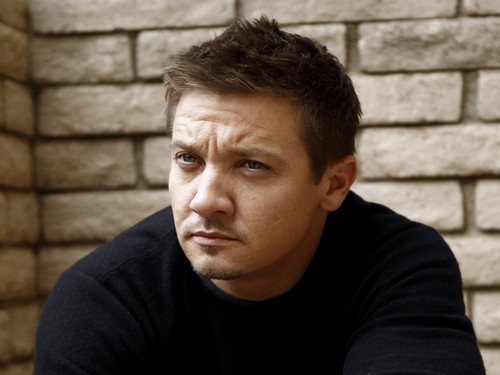
And just thinking on the side, like, I could see Joseph Gordon-Levitt playing Alexander...like, maybe if he was more restrained as in Inception, and didn't have Bruce Willis' nose. And was blonde or something. Alex is blonde. Maybe if I had the time travelling devices used in the book, I'd actually go and pick Edward Speleers or something. And I dunno. Now I'm trying to think of who I'd cast as Caspian instead of writing a blog. Jeremy Renner? Hahahahaha. Yeah, that's not actually a bad idea.

The man with no memory

The time-traveller
And I can't think of who I'd cast as the female lead. Someone less well-known. Or Emily Browning or something. This all works out, there's time travel.

Except that it's written as a novel, not a movie, and it's not a screenplay, and I don't have the resources to cast people like Jeremy Renner or Ed Speleers or whoever else into a movie of my story.

Moving right along.

What else of this week?

I felted an owl for a friend's baby shower that's happening tomorrow, which is also why I've gone back to my folks' place for the weekend.

It's the one in the middle. Moot and Nee-san came along for
reference sources.

And then I go home, and there's all of this going down:

3500 word art theory essay (due Thursday)
polishing the blog for my Titanic of an art course, Professional Practice
Finishing Tex
Starting Sheik
Getting photos of both, as much as I can
working out the fine details for directed studies supplementary material
finishing the armour for my Fibres project
finishing the other thing for Fibres (I think it's going to be called Testify, or something)
finishing the documentation for Fibres in general

Directed Studies gets assessed on the 19th of June

Fibres will be on the 24th.

And then I will sleep.

*Interjection!*

So, as mentioned earlier (I think?) I've gone back to my folks place for the weekend. This was primarily for a friend's baby shower, but also a bit of an escape from Newie, and the bit where I had stuff for Tex that I could have got done here.

Back when I did dance, I had a pair of Jazz Boots. They're hard to describe, so photo:

Mine were a size too big, and I have non-existent arches in my feet, so they usually hurt a bit when dancing in them. Ballet for a year helped. But I need shoes to build the armour boots onto, and realised that they were perfect, because they were all black, and the way the shoe was built was ideal.

And then I remembered that they were probably still at the family house, and we'd just moved.
I've just spent the last hour or so poking around the potential boxes that could contain the mystical boots, but to no avail. I think Mum may have Op-Shopped them. And it's after 12 now, so there's no real ability for me to go poking about in the op shops to see if they're still there after a month.

This is a little frustrating, but I guess I'll just have to go looking for different shoes again. Which is a shame, because I was kind of keen on those boots in particular.

On the upside, we found a pair of my brother's cycling gloves that he never uses anymore, which didn't get thrown out. And they're coming back with me because I need gloves with detailing on the fingers. They're getting a wash first I think though. Stinky.

So yeah, that's kind of where things are. I'm now tossing up between trawling ebay for more jazz boots, or trawling op shops for shoes, or caving and getting some cheap sandshoes from Kmart, which have no height-granting abilities, no support and no detailing. But I'm running out of time, so I can't jettison the idea purely on aesthetics.

HOLD THE PRESS

LOOK WHAT PRUE FOUND IN THE GARAGE


I'M SO HAPPY RIGHT NOW.

Oh. The thing I promised at the beginning.

There's this series of high fantasy novels I read or started reading in year eight of high school. And read all the way through high school, and they've only just finished, and I haven't read all of them, and they're the series where the author died before all of the books were written.

Anyway. The scene in my head is from the prequel to the series. It's called New Spring, and it's the shortest of all the books. If you want to read one of them, you could read that first. Or read The Eye of the World first, because that's where the story starts and I can't remember how much world explaining Robert Jordan skips out on in NS.


There's a scene in New Spring where Moiraine Damodred, the protagonist (and keystone character in the main series) is undergoing her final test to become a fully qualified mage (Aes Sedai). Part of the test involves  jumping into synthetic realities, and weaving a complex piece of magic in them while being put under severe stress. They do this multiple times.

There's a part in the test where the synthetic reality Moiraine is dropped into is a ballroom from the palace she grew up in. She starts the piece of magic, and then a stack of Orcs (Trollocs) start attacking her from all sides. Because one of the requirements of the test is that she keeps her cool at all times, she then has to figure out how to dispose of all the orcs before they can get to her. They appear one at a time at first, and she's able to dispatch them with fireballs, because she's a mage. And then more and more come and she'd end up failing the test if she were to stop the complex weave and panic and try to take out all of the orcs at once.

So she starts to dance.

Moiraine dances in the centre of the ballroom, which allows her to turn quickly, seeing the orcs as they come and react thusly with balls of flame, all the while maintaining the complex piece of magic required to advance from the stage.

And she does it. She's not allowed to bat an eyelid to the situation that is going on, but still manages to take down a room full of orcs by herself, all the while managing to work on the big project whose completion would allow her to advance. And then she finishes, bows the the imaginary partner she'd been dancing with, and keeps going through the trials, eventually succeeding and becoming a full-fledged mage (Aes Sedai, which means Servant of all in Old Tongue, FTR)

And all I'm saying is that currently, I feel like I'm in this situation. There's a buttload of things that need doing, and they keep piling on, and I can only take out as many as I can see, and I can't afford to lose my cool on this.

Let's dance.

Monday, October 1, 2012

NaNoWriMo #3 - Things that help with the writing bit

NaNo on Gone Aerial Part 1
NaNo on Gone Aerial Part 2
NaNoWriMo website

Resolving to at least try and maintain some visible level of enthusiasm and punctuality, I decided to keep posting, once a week, about NaNo. I thought that maybe, it might help encourage people to get interested and get on board and try something big and different and exciting.

So I've been plugging away like there is no tomorrow. Sort of. About a month ago, I had so many big things coming up:

Animania
21st
End of Semester
NaNo
December (And visiting people in Victoria)

Now two of those things are down, and the end of Semester is beginning to register in my head. I have, like, four weeks of madness left, and an assessment due tomorrow, and have to remember how to write a catalogue essay for that. So, as an exercise to the fingers and the mind, was like yes, I should do the weekly NaNo post right now.

So, now you know where I am. And how I've already covered the basics of National Novel Writing Month, and how stories in general work a'la Joseph Campbell.

So this week, with my brain scrambling for a subject, I thought I'd share a few of the things that I did last year to make writing a fifty thousand word novel a little easier:

Start with a notebook.Last year, I grabbed a fresh notebook and started scribbling in it. I wrote most of Shift on the computer, but for days when I was out doing things and suddenly had an idea, that notebook was invaluable. I would jot down plot points, notes on names and some of the basic research that I would wiki when, for example, I realised that I had no idea how C4 actually worked. Sometimes I would feel the need to actually write old-timey style, so there's bits of the novel in there too. For those of us who do not carry Smart Phones or Tablets, a Notebook is fun. Plus, you can draw in it and stuff too. Feels good to work with your hands once in a while. Oh, this would bring us to the next bit:

Write down how the plot works before you start typing.

This can happen in your notebook, or your computer, or on your wall with lots of bits of paper and red thread everywhere. (I'm a spatial thinker, so that last suggestion doesn't seem nearly as far fetched as it sounds)
The point is, you don't start building a house by sticking bits of gyprock together before pouring a foundation. A human body can't function without bones to support the muscles, and in the same way, it's important to write down basic plot points before you get started. Things like these always begin with a basic idea, but creating a baseline plot allows you to create something that can function and be follow-able for reading later. You can be as specific or as vague as you like with those plot points, but the fine details are something that you get to fill in later. The fine details are your novel.
This is something designed to help you, the writer, first and foremost. It means you don't get lost, or hopelessly confused about the different roles of your characters. And speaking of characters:

Make sure you know who is who and what they all look like.

I'll go with Inception as a visual example for this.


(Trying to upload photos on dialup-speed internet is making me go insane. You can have photos later.)

The main character list goes something like,

Cobb
Arthur
Eames
Ariadne
Yusaf
Saito
Fisher
Mal

If you watched the film with the sound down, and had the list of characters in front of you along with basic descriptions of appearace, you'd probably get at least four of the characters mixed up.
So is that guy with dark hair and blue eyes Dom, Eames or Fisher? Wait, Dom and Arthur are cohorts. So that scene with the brainstorming and the chair-tipping, are those guys Dom and Arthur?

Adding the roles to the character names in the list makes things a little easier. In the context of the movie,

Dom Cobb - The Extractor
Arthur - The Point ManEames - The ForgerAriadne - The ArchitectYusaf - The ChemistSaito - The TouristFisher - The MarkMal - The ShadeSo, the characters immediately have a bit more definition. They have roles now; you know what they're supposed to do and how they're supposed to behave. The person we've made watch the movie with the sound down has a little more information to work with.

Adding descriptions of the characters to their names and roles helps further that distinction between characters and how they function and interact. I draw, so drawing the characters helps for me.

Knowing that not everybody draws is something we as the MLs of NaNo for Newie have taken into account. We're sorting out a paper doll/avatar creating method currently, so you the writer can create visual aids/figure out what the character you are writing about looks like.

It's helpful because you don't end up accidentally creating a lot of characters that look the same.

Researching details, even a little, will make things kick butt better.

Do I know anything about firearms?
Not really. Most of my knowledge comes from pulling apart Nerf Guns and listening to people who know guns explain stuff. And Hollywood.

Hollywood has a bunch of things wrong about guns, but we'll leave that for later.

I got to write about guns last year. It was fun, but not really knowing model names or makes meant that I had to do a little research. I didn't do stacks, but I did do enough to be able to talk about them when I wrote. It adds a little extra to the novel on two different levels. The plebs can go 'oh, this person knows what they're talking about' and the pros can say likewise. Or at least, not throttle the writer for leaving out important things.

A few years back, I encountered a character in James Patterson's Saving the World and Other Extreme Sports. They'd had Galapagos Tortoise DNA spliced into their own genes and claimed to be over a hundred years old with the appearance of someone less than forty-five.
Which is all very well.
Until you realise that this novel is set in the present day (2007, when it was published), and that Watson and Crick first found the chemical structure of DNA in 1953. (And that's just discovering it. Mapping the human genome took about ten years, and that was only finished in the early 2000s.)

I know it's not common knowledge, but for those of us who remember trivia, it's a little frustrating.
And that's probably the trick to it: You don't have to research the heck out of these things, but enough to cover the information given in the novel will help a lot. Jargon is impressive and fun to use, but needs to be grounded enough that the people who know what you are talking about won't facepalm to the stars above.

Am I getting pedantic? Apologies. Point 5:

Show, don't tell.

Mira climbed the water tower, set up the sniper rifle and waited.

______________________________________

Mira adjusted the weight of her weapon against her shoulders for the climb. She pulled her hood further over her face and huffed against the biting cold that came from being awake at this altitude and time. Carefully, she scaled the freezing tower, brushing off the ice on the steel rungs with her hands before putting her weight on them. She reached the top of the tower and slid her sniper rifle from her back, assembling it for active use while looking for the best vantage point. Selecting her position, she silently moved into place, double-checking the padded coat that she'd be lying on for the next few hours. The cold here could kill a person if they were careless or foolish. Mira was neither of those things. She settled down, put her eye to the scope and began her hunt.

When writing, I have the option of telling you what happens, or showing it to you. Telling condenses what is going on. It simplifies the situation and keeps details to a minimum. Showing allows the reader to experience what is going on; to share the happening with the character and understand what is going through their heads. It's a very basic example, but the first piece of writing had me tell you what was going on. The second piece showed you. It's more interactive and (this is important when you're aiming for a word count) takes up more words to say. So have fun with adjectives; plot specific action sequences before you write them and talk about how something works rather than just it working. So much more fun.

Which in part brings us to the next bit.

Don't be afraid to use big words.

The English Teacher I had for year 12 is a fan of Westerns, Ancient China, horrendously bad puns and big words. He would do the kind of announcements in assembly that would expand your vocabulary just by listening. And in spite of him making us study John Donne and Snow Falling on Cedars, I will still nod to the Mantle. He taught us the value of using bigger or alternate words in writing (both creatively and in essays). I mean, there is certainly a feeling of achievement at being able to pronounce tergiversation but there is also more to come from it when you are able to use it in a sentence.

And sometimes it's an odd combination of cheating at scrabble and just finding alternate words.
For example, said.
Said means 'someone has spoken. Has - therefore it's past tense'
But how many different ways can someone have said something?

I think Mum has a poster of that kind of thing up on her classroom wall. It has stuff like 'whispered', 'shouted', 'grated', 'yelled', 'whimpered', 'cried', 'laughed', 'giggled', 'roared', 'grunted', 'asked', 'mumbled', 'uttered' and half a dozen others.
Using any one of those immediately attaches emotion to whatever the person is saying. It adds an extra dimension and allows the reader to experience it more completely.

This can be added to more than just how someone speaks. You can describe how they walk, move and do things. Sometimes it's word padding, but it does add to the novel regardless. Using bigger words is exciting. Just make sure you know what they mean first. (So, Gambit sounds gnarly, but make sure it's in the right context or things get odd pretty quickly).

Have fun.

When I was small, I had dolls. I didn't have very many of them, and they all pretty much ended their lives in the same manner; covered in pen and dirt and food. I never had a doll house, although I did at one stage have a castle smothered in glitter (like every seven year old girl should). Point is, I wasn't really into tea parties or shoes or playing house. Adventures into caves and giant trees was more my thing, complete with actual trees, sand, and my mother yelling at me to get off the shed roof before it collapsed or I got tetanus or something.
Point?
Um.

Have fun when you write your novel. You're constructing a story; a whole world, with characters that you've made and scenarios that you get to enact. Immerse your mind in it and write about the feel of things rather than just the happenings. Get emotional. Ingest too much caffeine and write 5000 words in one day. Look over to the clock and be surprised at the time.

Because soon it will be November, and I will get to have adventures like the ones I had when I was seven. Minus the glitter.

Monday, September 24, 2012

National Novel Writing Month #2: How to write a plot

The protagonist begins in their home; their world. Things might be a bit boring, but they're normal. One day, something odd occurs. It provides the protagonist with the opportunity to be different or to have their world changed. They'll refuse at first, but once they take it on, they'll be accompanied by a guide to show them the ropes of the new world. The protagonist follows the guide into this new world, where the limits and rules are not yet understood. This world will be dangerous or exciting, and shortly after crossing into it, the protagonist will have to farewell their old world, separating the self from it.

From here the protagonist undergoes a series of trials. Failure at one more more is common. During these trials the protagonist encounters some factor that will cause them to shift to non-dualistic thinking - they will align themselves with one cause or another, either for reasons of self or for another. They will be tempted to leave this path but ultimately will continue forward. From there they will be confirmed and initiated by the greatest power in the new world known. The power named will then either step down or be 'killed off', forcing the protagonist to assume the expectations given them. It is now that they realise what they are needed for and begin to strive to meet that cause. They achieve the beginnings of the cause and level up.


The protagonist is given the opportunity to return to their old world, and refuses; the new world has become their home. They will have to flee from the trials endured to gain the cause, often becoming incapacitated in the process. As a result, the protagonist is bailed out by allies and brought back to their home. They learn to pass back and forth from the old world and new, whilst keeping that cause or level up intact, and are granted the 'freedom to live'.

Quick - what story did I just tell you? Was is Star Wars (The original trilogy), The Lord of the Rings, The Matrix, Harry Potter or The Chronicles of Narnia?

That chunk above is a brief overview of something called The Monomyth, which was a theory developed in the early 20th Century by a guy named Joseph Campbell. I agree with him on most things with relation to story (except for one big one). This theory is one thing we are in accord with though; the idea that all stories we write have basically the same makeup. And not just me and Campbell. All of those big name stories up there have basically the same plot when you start looking at how they function. Things might get interesting if you swapped Ben Kenobi for Hagrid, but hey; they're both guides. Same with Yoda and Morpheus; they mentor the main character until they step down; either because the hero has surpassed their abilities or because death is a bit of a stopper in teaching surferboy how to pick up things with his mind.

The relevance between this and NaNo, is that I am a big spoilerbug when it comes to how stories work. Even now, unless you manage to get the brain bleach out immediately, you know that this is true. It means that every time you watch something and we're all like 'is the hero dead?' and you can be all like 'nope. Can't be dead because then the story won't progress. Cheers, Brooke.'

To which I will reply; 'No worries'.

One of the things I find is a bit of a block in people's heads when it comes to writing a story is that they don't know what to do with regards to a plot. Well, if all plots follow the same formula, this should make things a bit easier, shouldn't it? You would still have to invent characters, but to a degree, their roles have already been determined. It makes things quite a bit easier in that respect.
And there are always twists and turns with all this. In last year's novel, the Time Traveller was my guide, but he's also the one who validates the protagonist's role. Which is different, because he's not the father figure for the protagonist at all.

Things are getting convoluted.

Oh yeah; so there's a bunch of different things that you could try with writing novels; using the Monomyth for a base is just one. I got to chat to a mate last week who wanted to write for NaNo this year, who'd had a couple of knots in terms of how he wanted the layout to be. We figured that it might be fun to write a Choose Your Own Adventure novel, because it's written in Second Person. (Like how I'm writing in second person to you now)

It means that he has to do some preplanning, so that the plot goes where it should, but at the same time, has probably made his job a little easier. It's more to do with planning sections of plot and writing them.

And a few more weeks than that back, I wondered what it would be like to buddy up with someone on a novel; write exactly the same story from perspectives of different characters. This in part was going to be done with the Twilight series, actually. (And let's just get this straight right now: Meyer isn't my cup of tea. I think her plot could have done with some work. A lot of work. But she knows how to write something that will sell.) Midnight Sun was supposed to recount the events of Twilight from Edward's perspective. Do I care about Twilight? Nope. But the concept; the idea has merits. It'd mean that you could co-ordinate with a mate on writing a story; decide the plot points together and then write from two different characters. And having two authors for two characters would give said characters much more individual voices. Could be fun.

I guess another way you could go entirely would be to lampshade the concept of the hero; deliberately play with the plot. Another friend of mine was talking about how she'd lose the plot while writing a story if she tried. So we invented a world called The Lost Plot Office. Like the Dead Letter Office, but for plots of different stories.

Terry Pratchett, one of my favourite authors, does something similar to that; his Discworld series overtly plays with the tropes and archetypes and because you know how that part of the story is supposed to work, it's absolute gold. Its a story about a flat world supported on the back of four elephants standing on top of a turtle flying thorough space. And all the stories are true. That's in short the premise of his world, and it works something fierce.


So, if you click here, you'll end up being able to read more about Joseph Campbell's Journey of the Hero.
If you click here, you'll head over to National Novel Writing Month's website, where you can check out more of the project.
If you click here, you can read my last blog post on NaNo.
And if you click here, I'll redirect it to something vaguely interesting. Hopefully.

LINKSTORM!

November is still a little bit off; there's plenty of time for brainstorming. Get to it!

Wednesday, September 12, 2012

National Novel Writing Month 2012 (The first)

Hey folks.

Life has quickly turned into something terrifying and exhilarating as of late; Uni semester is heating up, I'm two weeks (barely) from a big Anime convention and three weeks from turning 21. (WHEN DID THAT HAPPEN?). And People make life interesting along the way. But it's good, I think. According to the breakdown of Relativity, time slows down the faster you go. Maybe that's why I'm always so temporally confused.

Anyway.

September is screaming by, and October is only going to be louder. And then:

There is Novemeber.

And November will be best month, because it's the month where I get to be a big shut in and do NaNo.

What is NaNo, I hear you all ask?

National Novel Writing Month is a project that happens online, every November. The project is simple: write a 50,000 word novel in thirty days.

And now I'm about to tell you why you should try it.

NaNo was something I had heard not a whimper of until a couple of days into November last year, where I had attended a birthday party for a friend. The theme for the birthday party was 'cool hats'.
So, with top hat attached to head, I attended. There was only one other top hat present at the party, and the owner and I engaged in light conversation until he mentioned NaNo.

And the rest was quite an interesting story.

Not a fifty-thousand word one. It was basically 'hey you should do this it's stacks of fun'

I had half an idea sitting in the back of my head from a dream earlier that year and started a week late.

It was only half an idea, but it was enough. Ideas are like fires. You get a small spark, and then feed it enough coffee, and suddenly you have this raging inferno of metaphor and concept bearing down on your keyboard like a truck with no brakes.

It's not that difficult to start a novel either.

Like I said, my novel from last year (Which ended up being called Shift) was about a guy with no memory and a time traveller. The time traveller sends the man with no memory to different points in time to stop events from taking place, in a bid to unmake the accident that destroyed the man's memory.

There was a lot more that unfolded from it, but the little thing got a lot bigger. I reached the goal of fifty thousand about half a week early, and then stopped writing, finishing the novel off later.

At this point in time, I've had people tell me that it's impossible; that they don't have time, or that they can't write.

Hmm.

I'll be posting up more exciting and helpful things on writing in a bit, as well as details on all the exciting things the Municipal Liasons in Newcastle are doing this year (That's me and my top hat-wearing mate Jo)

BUT IN THE MEANTIME

Why not at least consider it?

NaNo novels function differently to how a lot of people write. It's a self-driven project, and is about the word count. You don't have to write a Stephen King (And believe me, you won't unless you are Stephen King). The same would go for Dan Brown, James Patterson or Matthew Reilley.

By the way, most of the novels those authors churn out are enormous. 50,000 words is roughly the same length as, say, The Hitchhiker's Guide to the Galaxy, The Great Gatsby, Fight Club, The Notebook, The Invisible Man, Of Mice and Men and Brave New World. And odds are you have probably read one of these, for, like, school or something. They're not that big.

Comma explosion.

My point is, the word count is not that big. It's possible. It actually equates to 1,667 words a day in November. Which might sound scary initially until you realise that it's creative writing. It could be drivel. Doesn't have to be, but could be.

And because the MLs for Newcastle are going to be Wizzards this year, there will be a stack of things to do if you want to hang out with other people who are likewise tanked up on coffee. Or tea. Or chocolate.

Mmm. Chocolate.

Another thing that scares a lot of people is self editing. Coincedentally, it's the same reason why a lot of people I meet tell me they can't draw.

The conversation usually starts like that, and then goes "Oh, but you're an art student, of course you can draw".

hahaha. nah man.

I think I usually reply to that with, "It's more about not telling yourself that you suck"

See, when you write anything (or draw anything, for that matter), it's easy to immediately compare it to the other people you are interested in in that area (So, let's go back to Patterson for writing and, say, Rembrandt for drawing). Upon the immediate comparison that your work is not exactly like a Rembrandt, there is desk-flipping and walking away.

I think we tend to write ourselves off to quickly with regards to that.

The other thing about NaNo writing is that you simply don't have time to go back and edit everything; you could spend time making your grammar shiny and your sentances pretty, but in the end, it's too much time to go back and look at stuff. It's very easy to get self-critical, until the novel gets chucked out in frustration or anger.

Lemme tell you, I picked Time Travel last year. Didn't think through the mechanics of it. Had to decide halfway through the novel whether or not to kill someone because I couldn't remember whether or not time was linear or branching in nature.
(It's linear)
But at the time, I didn't think things through clearly enough. I could have spent ages going back and fixing things, but there simply wasn't time.

That's okay though, because the feeling of accomplishment at the end of the novel was great. It's the sensation of setting out to do something and achieveing it and getting to share that achievement with a whole bunch of people. Which is grand.

So. What do we have at the end of this post-with-no-pictures?

Try NaNoWriMo.
It's stacks of fun.
50,000 words in November.
You don't have to write a masterpiece.
Newcastle will have some really fun MLs this year.
It's achievable.
Lots of caffiene.
Stop telling yourself you suck.
Write like crazy and don't get caught up in re-reading or editing.
It's a big challenge with a proportionate amount of joy at completion.

Click here to check out the NaNo website. There's still plenty of time to consider giving it a whirl.

And I can promise you, if you do it, you'll never be scared of wordcounts again.